Let's be honest: the moment you open that closet door, it often looks like a black hole of mismatched hangers and forgotten sweaters. You spend five minutes just trying to find your keys, let alone a specific shirt for an interview. I've been there, standing in my own cluttered space at 7 AM, wondering why I can't find anything. The good news is you don't need a full weekend or a professional organizer to fix this. It's entirely possible to clean and organize your closet in under 30 minutes if you stick to a strict plan and ignore the temptation to "just look." This guide cuts through the fluff and gives you the exact steps to turn that chaos into a functional space without the burnout.
Key Takeaways
- Sort Fast: Use the "six-month rule" to quickly decide what stays and what goes.
- Vertical Space: Utilize wall-mounted solutions to free up shelf area for bulky items.
- Maintain Consistency: A 5-minute daily reset prevents the clutter from returning.
Why a Tidy Closet Matters More Than You Think
A clean closet isn't just about making your bedroom look pretty for Instagram. It's a functional asset that impacts your mental state and daily efficiency. When you can see your clothes, you make better decisions about what to wear, reducing decision fatigue in the morning. Clutter creates visual noise, which can subconsciously increase stress levels.
Furthermore, proper organization extends the life of your garments. When clothes are crammed together, they wrinkle, snag, and lose their shape. By giving each item a designated spot, you protect your investment in your wardrobe.
Pro Tip: If you have limited closet space, consider looking into transform-your-living-room-with-strategic-lighting principles for your bedroom too; good lighting makes it easier to spot stains and colors quickly.
Step 1: The 30-Minute Prep (Minutes 0-5)
You can't organize effectively if you're hunting for supplies. Before you even touch a piece of clothing, gather your toolkit. You need trash bags for donations and items to toss, a laundry basket for the "keep" pile, and cleaning supplies.
Gather Your Essentials
- Heavy-duty trash bags: One for donation, one for trash.
- Microfiber cloths: For dusting shelves and wiping down surfaces.
- All-purpose cleaner: Safe for wood or laminate surfaces.
- Hangers: Invest in a pack of uniform hangers (slim, velvet ones are great) to create a streamlined look.
Warning: Do not try to organize while standing in the closet. Pull everything out onto your bed or floor first. You need to see the volume of items you own to make realistic decisions about space.
Step 2: The Purge (Minutes 5-15)
This is the hardest part, but also the most critical. Take every single item out of the closet. As you hold each piece, ask yourself three questions:
- Have I worn this in the last six months?
- Does it fit me right now?
- Do I love wearing it?
If you answer "no" to any of these, it's time to let it go. Be ruthless. That sweater from a college party in 2015 isn't coming back into style soon enough for you to need it. If an item is damaged beyond repair, toss it immediately.
Pro Tip: If you are unsure about an item, put it in a "maybe" box. Seal the box and set a date 30 days out. If you haven't opened the box by then, donate it without opening it again.
Step 3: Deep Clean the Space (Minutes 15-20)
With the closet empty, you have a blank canvas. This is when you get into the cleaning. Vacuum the floor and shelves to remove dust bunnies and lint. Wipe down all surfaces with your cleaner. Don't forget the corners and the ceiling of the closet—dust accumulates there too.
If you have hardwood floors in your home, ensuring they are clean helps maintain a tidy atmosphere throughout the room. For more specific advice on maintaining hard surfaces in high-traffic areas, you might find durable-bathroom-flooring-for-busy-homes-expert-tips applicable to your flooring care routine as well.
Step 4: Strategic Reorganization (Minutes 20-30)
Now, put the "keep" items back in. The goal here is logic and accessibility.
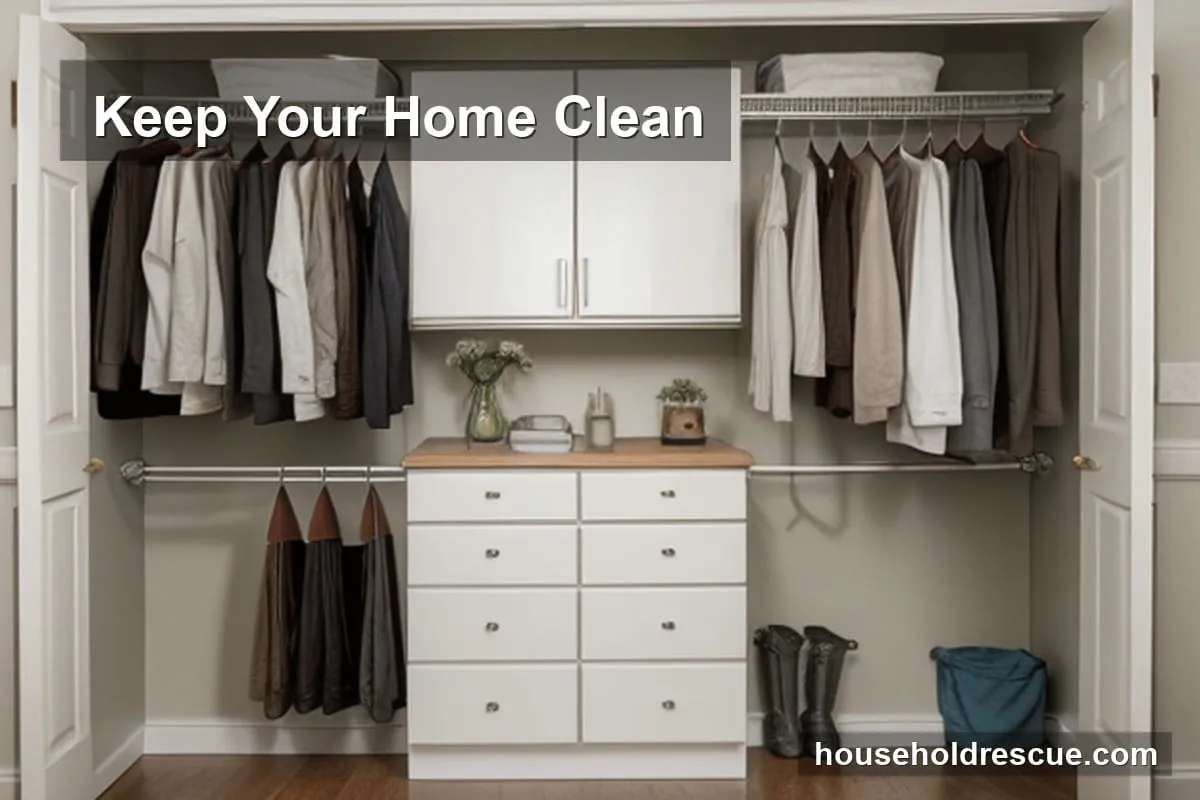
- Group by Category: Hang all shirts together, pants together, etc. Don't mix seasons unless you have a very small closet.
- Frequency Matters: Place the items you wear daily at eye level. Seasonal or rarely worn items go on the top shelf or in the back.
- Vertical Storage: Use hanging organizers for accessories like belts or scarves. This frees up shelf space for folded items.
If your closet is getting too full, you might need to re-evaluate your storage solutions. Sometimes, the solution isn't just organizing what you have but creating new zones. For instance, if shoes are a major source of clutter, check out organize-your-entryway-shoes-for-effortless-daily-access for strategies that can be adapted to closet shoe storage.
Pro Tip: Use the "one-in, one-out" rule. For every new item you buy, remove an old one. This keeps your inventory manageable without constant major overhauls.
Maintenance: Keeping It Tidy
The hardest part is keeping it that way. A 30-minute overhaul is useless if the mess returns in a week. Implement a "daily reset" where you hang up clothes immediately after wearing them or put them in a hamper, not on the floor.
Regular maintenance also involves checking for pests or damage. If you notice any unusual signs in your home, like termite activity, it's crucial to address it early to prevent structural damage that could affect your storage areas. For more on this, see spotting-termite-damage-early-can-save-you-thousands.
Similarly, if you have plants in your bedroom or near the closet that might be shedding leaves or attracting pests, regular checks are vital. You can learn how-to-spot-and-treat-pests-on-low-light-houseplants-a-complete-guide to ensure your greenery doesn't become a hidden source of clutter or infestation.
Frequently Asked Questions
1. How do I start organizing my closet if it's completely cluttered?
Start by emptying the entire closet onto your bed and sorting items into three distinct piles: keep, donate, and trash. Once everything is out, clean the empty space before putting anything back in.
2. What if I don't have enough storage space?
If you are running out of room, consider installing vertical wall storage or using under-bed containers for off-season items. You might also need to assess if your home's structural integrity is sound; looking at signs-doors-windows-need-immediate-repairs can sometimes reveal if you need to expand or reconfigure your living space.
3. How often should I clean my closet?
A quick 5-minute tidy-up every week is sufficient for daily maintenance, while a deep clean and full sort should happen every three to six months.
4. Can I organize my closet in less than 30 minutes?
Yes, by focusing on a single zone like one drawer or the top shelf, you can achieve significant results in under 15 minutes. Prioritize high-traffic areas for maximum impact.
5. What's the best way to keep my closet smelling fresh?
Use natural odor absorbers like cedar blocks or lavender sachets. Avoid harsh chemical sprays that can damage fabrics or leave a strong scent on your clothes.
6. How do I handle sentimental items that I don't use often?
Store these in labeled, archival-quality boxes and place them on the highest shelf or in a less accessible area of the closet to keep them safe but out of the way.
7. Are there eco-friendly cleaning products I can use?
Absolutely. A mixture of white vinegar and water is an effective, non-toxic cleaner for shelves, and baking soda works well for scrubbing stains on floors.
8. How can I make my closet more functional for a small space?
Invest in slim-profile hangers and utilize hanging organizers to maximize vertical space without losing floor area.
Pro Tip: If you are looking to refresh your home environment, adding some greenery can help. Check out best-indoor-palms-for-dim-rooms-low-maintenance-plants-that-thrive to find plants that thrive in low light and add a touch of nature to your organized space.
Maintaining Your Home's Integrity
While organizing, you might notice other areas of your home that need attention. If you are unsure whether a DIY approach is sufficient for larger projects, understanding diy-or-professional-how-homeowners-choose-inspection-checklists can help you decide when to call in a pro.
Additionally, if you have plants that need repotting or refreshing as part of your general home maintenance routine, knowing revive-your-indoor-garden-simple-tips-to-repot-and-refresh-houseplants ensures your indoor garden stays healthy and doesn't contribute to clutter.
Key Takeaways
By following these steps, you can transform your closet into a sleek, organized space in under 30 minutes. Remember:
- Start with a clean slate by emptying and sorting items.
- Use smart storage solutions to maximize space.
- Commit to regular maintenance for long-term success.
With a little effort and the right strategies, your closet can become a source of calm and efficiency in your daily life. Ready to get started?
This article provides general information on home organization and cleaning. It is not intended as professional advice for structural repairs or pest control; always consult a qualified professional for specific home maintenance issues.
Sources & References
- Cleaning and Sanitizing Your Home — Centers for Disease Control and Prevention (CDC)