
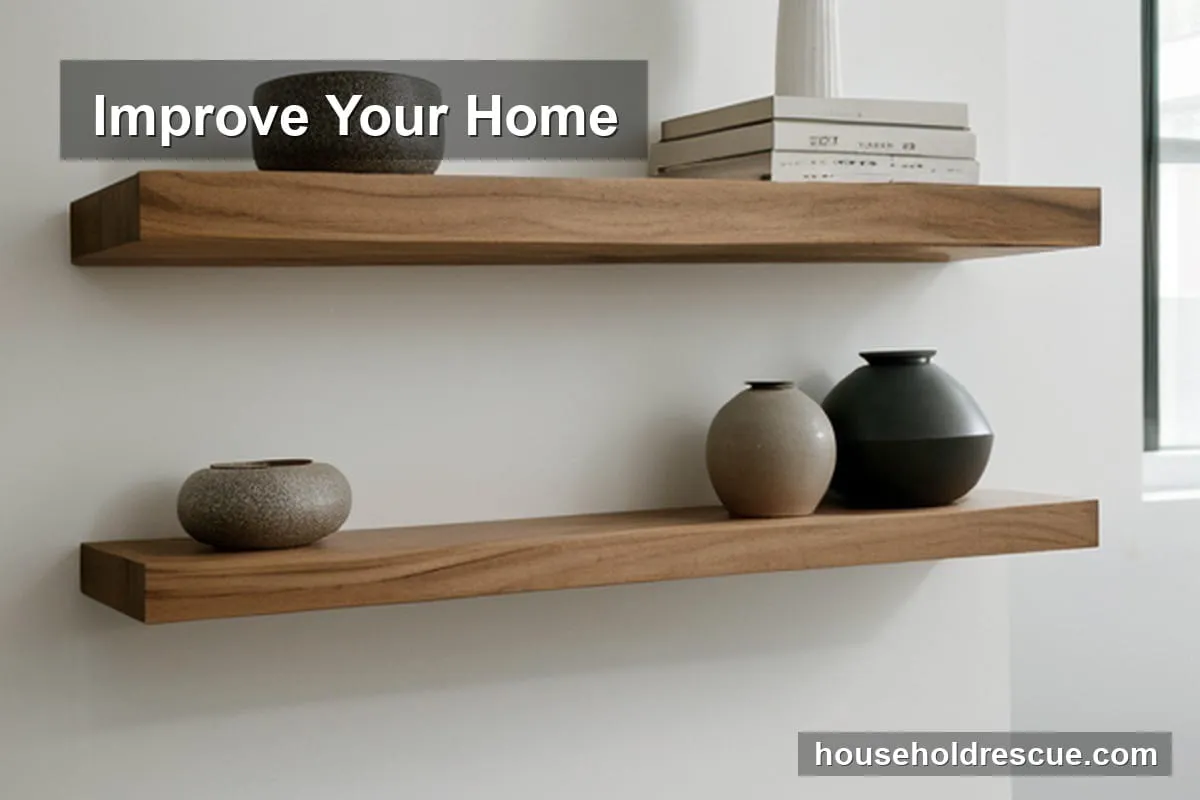
Floating shelves are deceptively simple. You mount them to the wall, and suddenly you have display space without the visual weight of a bulky bookcase. But there's a fine line between a curated vignette and a chaotic mess. I've seen plenty of shelves that look like a garage sale happened on the wall—stacks of books leaning precariously, mismatched trinkets, and dust collectors everywhere. The secret isn't buying more decor; it's knowing what to leave behind.
Getting that clean, elegant look is less about following rigid rules and more about understanding how your eye moves across a surface. It requires a bit of restraint and a good eye for balance. If you're worried about the structural integrity of your walls before you start drilling, check out how professional plumbing elevates your bathroom remodel to see how high standards apply to home installations generally.
Key Takeaways
- The Rule of Three: Grouping items in odd numbers (3, 5, 7) creates a more natural, less static look than even groupings.
- Negative Space is Key: Leave at least 20-30% of the shelf surface empty to let your eye rest.
- Vary Heights and Textures: Combine tall vertical items with low horizontal ones, mixing matte and glossy finishes for depth.
- Functional Storage: Use trays or baskets to corral small loose items like keys or remote controls.
The Art of Restraint: Why Less is Actually More
We often feel the need to fill every available inch of space. It's a natural instinct, especially when we finally have a new shelf to show off our collections. But in interior design, negative space is just as important as the objects themselves. When you crowd a floating shelf, you create visual noise that fights for attention, making the whole wall feel smaller and busier.
Think of your shelves like a gallery wall. You wouldn't hang a painting right on top of another one; you'd give them room to breathe so the viewer can appreciate each piece. The same applies to decor. A shelf that feels "full" but not "cluttered" usually has a mix of large statement pieces and plenty of breathing room.
If you are looking to add some greenery to your space without making it feel like a jungle, consider the best indoor palms for dim rooms. They offer height and texture that can anchor a shelf beautifully.
1. The Rule of Odd Numbers
Here's a trick designers have used for decades: group your items in odd numbers. Whether it's three vases, five small sculptures, or seven candles, odd numbers create a dynamic visual rhythm. They force the eye to move around the arrangement rather than stopping dead center.
Try placing a stack of three books leaning against the wall, then adding a single tall vase in front of them, and finishing with a small plant on the far right. That asymmetry feels much more organic than a perfectly symmetrical row of identical objects.
2. The Triangle Composition
When arranging items on a shelf, try to create an invisible triangle. Place your tallest item in one corner (say, top left), a medium-height item in the opposite corner (bottom right), and a third element somewhere in between or at the other end.
This creates a visual path that guides your eye across the entire shelf. It prevents the arrangement from looking like it's stuck to one side of the wall. If you have multiple shelves, repeat this triangular composition on each level for a cohesive look throughout the room.
3. Mixing Textures and Finishes
Clutter often happens when everything looks too similar—like a shelf full of shiny blue glass bottles. To create elegance, mix materials. Pair something hard and smooth, like ceramic or metal, with something soft and organic, like wood, linen, or plant leaves.
For instance, a matte black vase looks great against a rough-hewn wooden bookend. The contrast in texture adds depth without adding visual weight. If you have plants that are struggling, make sure they are healthy enough to add life; check why my houseplant cuttings are rotting instead of rooting if you need to troubleshoot your greenery first.
Step-by-Step: Curating Your Shelf Without the Chaos
Ready to get started? Don't just start sticking things on there. Follow this process to build a look that lasts.
Step 1: The Purge (Remove Everything)
Before you add anything, take everything off the shelves. This is the hardest part, but it's necessary. You need to see the empty slate. Look at your items with fresh eyes and ask yourself: "Does this add value or just take up space?" If an item doesn't fit your current aesthetic or serve a purpose, move it to another shelf or donate it.
Step 2: Anchor with the Tallest Item
Start by placing your tallest object. This is usually a tall vase, a standing sculpture, or a stack of books topped with a decorative object. Place it slightly off-center to create interest. This item acts as the anchor for the whole arrangement.
Step 3: Layer in the Middle and Front
Now, add items of medium height. These can be placed behind or slightly in front of your anchor. Don't be afraid to lean objects against the wall; it creates a layered look that feels less staged.
If you have smaller items like figurines or trinkets, consider using a how to clean office furniture and keep your workspace professional approach here: treat them with the same care as a desk display. Keep them grouped so they don't scatter.
Step 4: Add Functionality with Trays or Baskets
This is the secret weapon against clutter. If you have small, loose items that you need to keep handy—like remotes, coasters, or keys—don't just scatter them. Put them in a tray or a woven basket.
Not only does this corral the mess, but it also adds a textural element to your shelf. A simple ceramic tray can turn a pile of random objects into a cohesive "zone" of functionality.
Step 5: The Final Edit
Step back and look at the shelf from across the room. Does it feel balanced? Is there enough empty space? If you feel like you need to add one more thing, don't. Usually, the shelf is already complete. A little emptiness goes a long way in creating an elegant vibe.
Common Pitfalls That Ruin the Look
Even with good intentions, it's easy to slip up. Here are the most common mistakes I see people make when styling shelves, and how you can avoid them.
- Mistake 1: The "Wall of Books"
Stacking books flat all the way across creates a heavy, blocky look. Instead, mix in vertical stacks with horizontal ones, and intersperse other objects to break up the monotony. - Mistake 2: Ignoring Scale
A tiny trinket on a massive shelf looks lost, while a huge lamp on a narrow shelf looks dangerous. Always consider the ratio between your decor and the shelf size. If you have a large shelf, you need larger statement pieces to balance it out. - Mistake 3: Too Many Colors
A rainbow of colors can feel chaotic. Stick to a palette of 2-3 main colors for a cohesive look. For example, stick to neutrals with one accent color like terracotta or sage green. - Mistake 4: Dust Bunnies
Shelves are notorious dust collectors. If you have dusty items, they will ruin the elegant look instantly. Make sure you know how to clean office furniture and keep your workspace professional so you can apply those same gentle cleaning techniques to your decor.
Real-World Transformations
Let's look at how a few simple changes can completely alter the vibe of a room.
Scenario A: The "Everything" Shelf
The Problem: A living room shelf was filled with every book, photo frame, and souvenir from the last decade. It looked like a museum storage unit.
The Fix: We removed 60% of the items. We kept only the books that matched the room's color scheme, grouped them in stacks of two or three, and added a single large piece of art leaning against the back. The result was a shelf that looked intentional and spacious.
Scenario B: The "Bathroom Vanity" Shelf
The Problem: A bathroom floating shelf had bottles of shampoo, soap dispensers, and towels scattered everywhere. It felt messy and unhygienic.
The Fix: We used matching opaque containers to decant products, hid the bulkier items in a wicker basket, and added a small plant for freshness. For more ideas on organizing bathroom spaces, you might also want to read about simple ways to clean bathtubs and eliminate tough stains effortlessly to keep the whole area pristine.
Frequently Asked Questions
Q: How do I stop my floating shelves from looking cluttered?
The most effective way is to embrace negative space. Leave at least 30% of the shelf surface empty and group items in odd numbers like three or five. This creates visual rhythm and prevents the eye from getting overwhelmed by too many objects.
Q: Can I mix different styles on one shelf?
Yes, but you need a unifying element to tie them together. For example, if you have a rustic wooden tray and a modern metal vase, ensure they share a similar color palette or are placed close enough to create a cohesive group. Consistency in color or material is key when mixing styles.
Q: What kind of decor works best on floating shelves?
The best decor combines function with aesthetics. Books, plants, and art are staples, but don't forget functional items like trays or baskets. If you need to refresh your greenery, learning how to safely use fertilizers in gardening expert tips can help you keep plants looking their best for display.
Q: How do I style a shelf above a sofa?
A shelf above a sofa should be wider than the sofa itself. Aim for the shelf to be about 2/3 the width of the sofa to create balance. You can also use it as an extension of the room's decor, perhaps adding how to transform your patio with string lights for a magical outdoor space concepts indoors by using warm lighting to create a cozy atmosphere.
Q: Should I use baskets on floating shelves?
Absolutely. Baskets are one of the best tools for hiding clutter. They provide a designated spot for loose items like remotes, coasters, or magazines, keeping the shelf looking tidy while still being accessible.
Final Thoughts: The Joy of Curated Spaces
Styling floating shelves isn't about following a strict set of rules; it's about creating a space that feels like you. It takes practice to know when you've added enough, but once you get the hang of balancing height, texture, and negative space, you'll find that fewer items actually make a bigger impact.
Remember, your shelves are a reflection of your home's story. Don't be afraid to change things up as seasons change or your tastes evolve. If you ever need to tackle other areas of the house, like organizing a small kitchen, look into smart appliance setup ideas to maximize small kitchen space for inspiration on how to apply similar principles elsewhere.
Pro Tip: The "One-In, One-Out" Rule
To keep your shelves from becoming cluttered over time, adopt the rule that for every new item you add, one must go. This keeps your collection curated and prevents the slow creep of unnecessary objects.
Safety Note
Always ensure your floating shelves are securely anchored to wall studs or using appropriate anchors for drywall, especially if you plan to place heavy items like books or decor on them. A falling shelf can cause serious damage.
Did You Know?
Studies in environmental psychology suggest that organized, uncluttered environments can reduce cortisol levels and improve focus. So, a tidy shelf isn't just pretty—it's good for your mental health.
Sources & References
- Environmental Psychology and Stress — American Psychological Association